Our group investigates pressing questions for the conservation of terrestrial biodiversity using diverse bilogical approaches. Given thew current climate and biodiversity crises, there is a focus on the ecological implications of global environmental changes. The foundations of our group are an inclusive and welcoming environment and the pursuit of excellence and the development of early career researchers. Curently there is a strong focus on unserstanding the phenomenon of dieback in woody plants and the impact of cyclones on forest structure and function. The group is led by Gunnar Keppel and is based at Adelaide University.
2026 MEMBERS:
Gunnar Keppel (group leader)
Chloe Bentze (PhD student, UniSA) – Project: The ecology of stringybark dieback in the Mount Lofty Ranges.
Donna Fitzgerald (PhD student, UniSA) – Project: Quantifying dieback of stringybarks in the Mount Lofty Ranges using remote sensing.
Michael Otasowie Eguagie (PhD student, UniSA) – Project: Cyclone impacts on the functioning of rain forests.
Selected Alumni:
Alivereti Naikatini (Director of Research & Development, Ministry of Forestry, Fiji): former PhD student.
Siteri Tikoca: former PhD student.
Stephen Fricker (Operations Manager, Medical Entomology, Northern Territory Government ·): former Masters student
Sean Sparrow (Contaminated Sites Assessment Officer, Department of Climate Change, Energy, the Environment and Water}: former Masters student
Xiang Ning ‘Charlotte’ Kok (Wildfild Ecologist, Department of Environment and Water): former honours student
Anthony Randell (Site Contamination Officer, Environmental Protection Agency South Australia): former honours student
CURRENT PROJECTS
Current and Future Impacts of Tropical Cyclones on Forests
Tropical cyclones are frequent, large-scale events that cause severe damage to nature and ecosystems. They are predicted to increase in intensity and to occur at higher latitudes dues to anthropogenic climate change. This project investigates the impacts of tropical cyclones on the structure and functioning of rain forests and how these are likely to change as a result of climate change. Functional trait data will be related to cyclone intensity to infer how affect the functioning of forests. Key collaborators are: Thomas Ibanez (University of Hawaii), Christophe Menkes (IRD Noumea), and Dan Metcalfe (CSIRO). Funding for the project is provided by the Hermon Slade Foundation.
Dieback of Stringybark Forests in the Mount Lofty Ranges
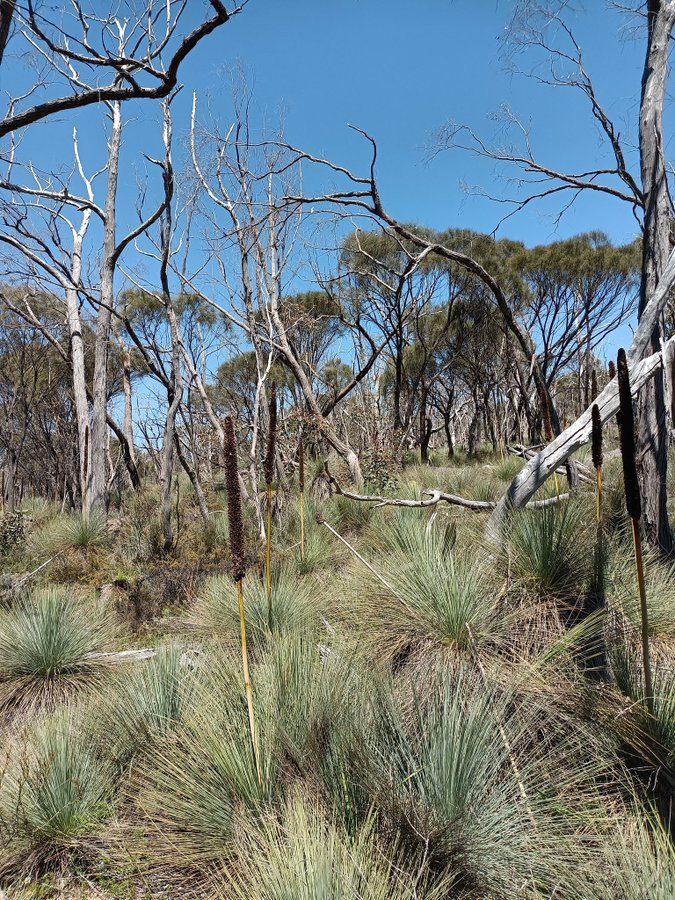
Three species of stringybarks occur in South Australia: the red stringybark (Eucalyptus macrorhyncha), the messmate stringybark (E. obliqua), and the brown stringybark (E. baxteri). Dieback, often related to drought events, has been reported for all three species but details about its extent and causes are lacking. This project aims to build this basic knowledge to enable improved management. Key collaborators are: Greg Guerin (University of Adelaide), Stefan Peters (University of South Australia), and Trees for Life.
Microclimate and Biodiversity
Microclimate can have profound impacts on the distribution of biodiversity. Despite this we know little about how vegetation modifies prevalent conditions to create unique microclimates. This project investigates how native vegetation is moderating microclimate in South Australia. We have established a network of five sites that consist transects starting at the edge of vegetation and equipped with temperature and humidity sensors in the air and soil to determine how vegetation moderates prevalent climates. The project is based at the University of South Australia and multi-disciplinary. Key collaborators are John Boland and Stefan Peters, both at the University of South Australia.

Refugia as safe havens for biodiversity in the Anthropocene
Refugia are locations that facilitate the persistence of biota when the surrounding landscape becomes inhabitable for a species due to environmental change. The ability to foster the persistence of biodiversity is facilitated by refugia their ability to buffer environmental change, often as result of topographic complexity. Given the rapid ongoing environmental changes in the Anthropocene, refugia have received considerable attention for their potential to facilitate in situ persistence of biodiversity. This project investigates the role of refugia in facilitating the persistence of biodiversity under anthropogenic climate change.
Climate-proofing the Mount Lofty Ranges
As part of the Rebird the Ranges initiative we are seeking to assist habitat management in the Mount Lofty Ranges by forecasting likely changes in woodland communities due to the warmer climate with more extreme droughts that is increasingly manifesting. Our approach will be inter-disciplinary and integrative, with vegetation surveys, functional traits, physiological measurements, and diverse remote sensing approaches providing key data sources. Top-up scholarships are available and more detail can be found here).
 Biodiversity in Oceania