The Melanesian Observatory (Melanobs) is a scientific research project focused on the ecology, biogeography, and conservation of forests in the Melanesian region. The project is led by Thomas Ibanez at the IRD in Noumea (New Caledonia) with close collaborators in Fiji (Department of Forestry and NatureFiji-MareqetiViti), Solomon Islands (Solomon Islands National University and Solomon Islands National Herbarium), Vanuatu (Department of Forests), the New York Botanical Garden, and Adelaide University (Figure 1). The backbone of this observatory is a network of long-term permanent forest plots that are being jointly created, and then maintained by the individual countries. Such plots have now been established in New Caledonia (Blue River Provincial Park and Great Ferns Provincial Park on Grand Terre, and Siloam on Lifou), Solomon Islands (Kolombangara), and Vanuatu (Nusumetu).

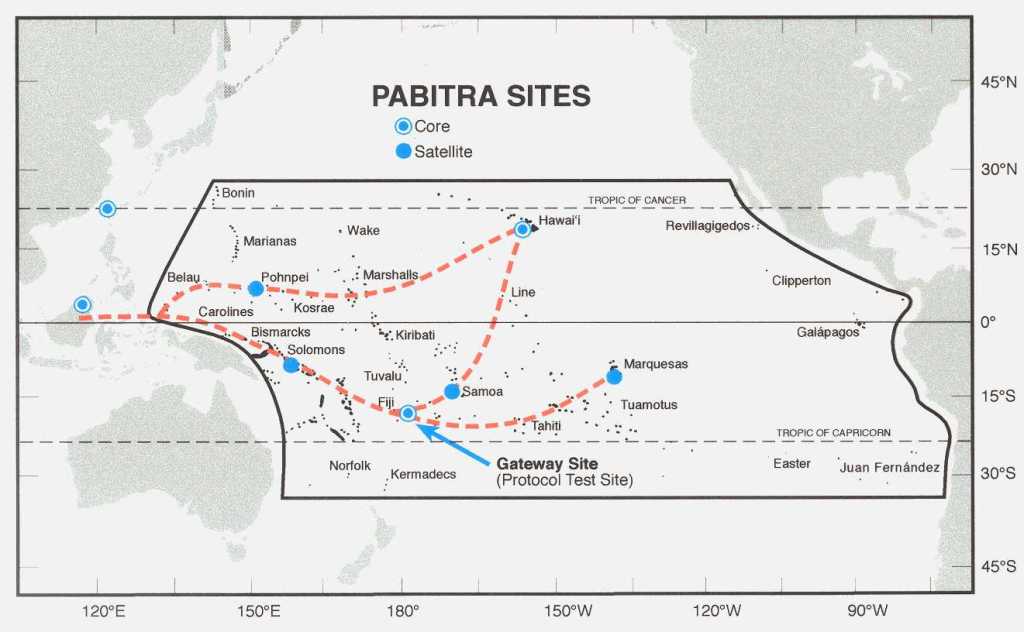
Melanobs builds on some of the ideas of the Pacific-Asia Biodiversity Transect (PABITRA), championed by the late Dieter Mueller-Dombois. Key objectives shared between Melanobs and PABITRA include: 1) being a collaborative program for investigating the function of biodiversity and the health of ecosystems in the tropical Pacific Islands; 2) bringing together terrestrial ecologists and conservation scientists working in the Pacific; 3) enabling and developing Pacific Islanders to better understand and protect their biodiversity; and 4) establishing a transect of research sites across the Pacific (see Figure 2 for PABITRA sites).
 Biodiversity in Oceania