
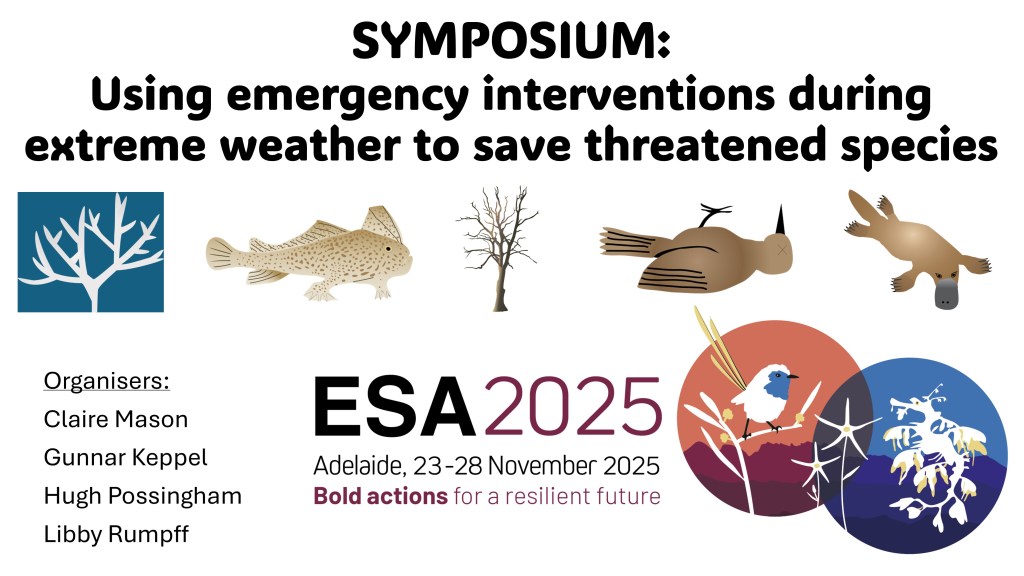
Climate change is increasing the frequency and intensity of extreme weather and associated catastrophic ecological events. Recent Australian examples of catastrophic events include the 2019/20 megafires and the ongoing 2024/25 drought in South Australia. Such catastrophic events can have dramatic consequences for populations through high mortalities but are difficult to forecast and plan for. To better understand what is currently happening in Australia to address extreme events using emergency interventions, we are organising a symposium at the next meeting of the Ecological Society of South Australia (Figure 1).
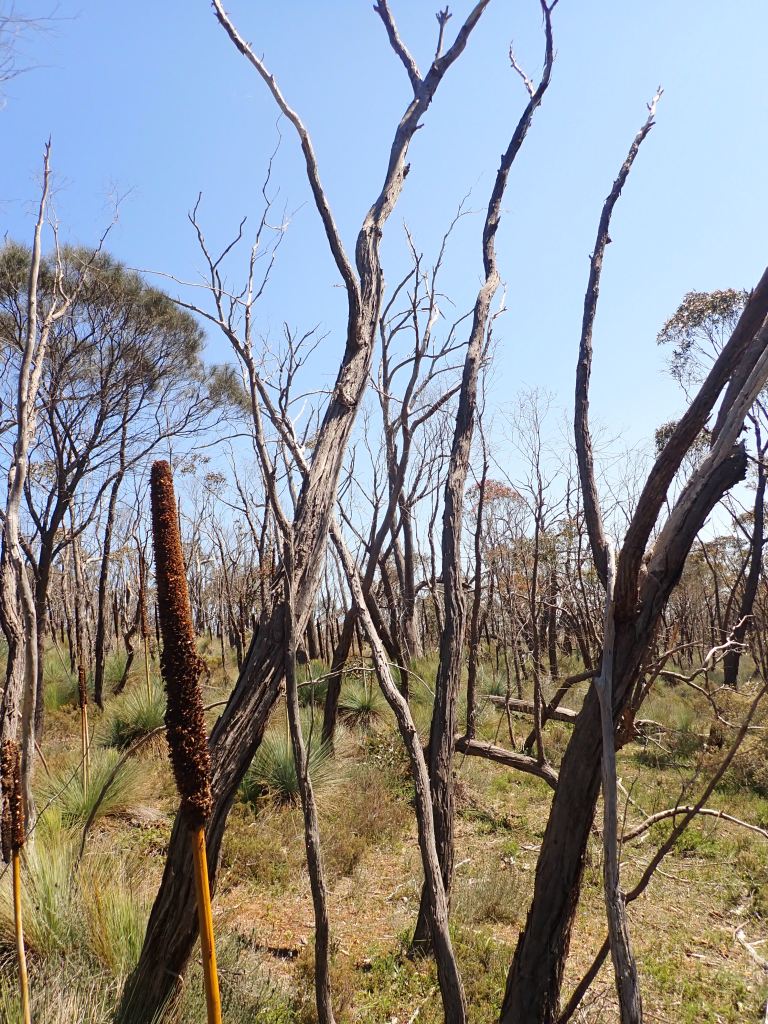
However, we often fail to account for the possibility of such catastrophes in conservation planning, rendering threatened populations and ecosystems highly vulnerable (Figure 2). If catastrophic events remain unaddressed, we are facing loss of biodiversity that could be considerably reduced or prevented by incorporating emergency interventions into standard conservation practice during and after catastrophes. Therefore, If we are serious about achieving zero extinctions, we need to plan for catastrophic ecological events associated with extreme weather.
In Australia, both small-scale, ad hoc responses (e.g. tree watering or water stations in drought) and expensive coordinated responses (e.g. emergency evacuations of threatened species from fire fronts), have been undertaken. Both preventative and preparatory interventions,such as fire brakes and seed banks, respectively, may protect key populations of vulnerable species or allow rapid responses after a catastrophe. Some of such emergency responses have been databased in AdaptLog.
Recognizing the importance of raising awareness about the need to account for the possibility of ecological catastrophes and for planning emergency interventions for threatened biodiversity, we are organizing a symposium on the topic (Figure 1) at the next meeting of the Ecological Society of Australia (ESA 2025). Our organising team for the symposium includes Claire Mason, Gunnar Keppel, Hugh Possingham, and Libby Rumpff. It will focus on emergency interventions that are implement before, during, or immediately after a catastrophic ecological event. The symposium will bring together researchers and practitioners who have started to work on identifying potential emergency interventions for extreme ecological events. The goal is to summarise current practices and to lay the foundation for integrating emergency interventions in conservation planning under climate change.
Would you like to contribute to this symposium? You can submit your abstract here – the dealine is 18 July. We encourage the participation of Early Career Researchers (including students) working in the field.
 Biodiversity in Oceania